Segment One Blog Project

http://cassiopeiaart.deviantart.com/art/Elements-Fire-186141343
A.ENVIRONMENT
We Ignis live on a large landmass called =åµå [ 'λa ma ] where it is cloudy all year long. Right in the middle of it, there is a grand volcano, called ¬å˜Ω僨´©ø [ laN θa 'fwe γo ], that rumbles and spews out ash and smoke several times a month; it erupts 4 times a year (it is how we measure our year). The terrain is rocky but with lots of plants; near the ocean, there are sand and palm trees. It is rarely sunny here, but it rarely rains (which is a good thing because we have to hide from it and it can be a stressful time). As for flora, we do not have a large variety of it; we have yucca and oak, and some types of shrubs. But, there is a beautiful and incredibly rare flower which appears every few decades; it starts as yellow, and as it flowers, it becomes orange, and finally a beautiful shade of red right before it wilts. Most animals run from us; we hunt and eat most of the wildlife around here. It includes frogs and insects (such as beetles and ants), tortoises, rodents, a large variety of birds, fish, deer, and goats.

http://la-casa-de-la-abuela.blogspot.com/2006/06/el-arbol-que-continuacion_06.html
B.CULTURAL KNOWLEDGE
Norms: For us Ignis, the first few days after birth are important to our development; therefore, both parents focus exclusively on their baby and disregard their work, while their extended family and close friends pick up their work, and help them by bringing them food and support. If this is not done, the baby might not live to grow up, and if he/she does, it is going to be a miserable life.
All of us have to take part in funerals, since it is very important all people participate so that person can restart their new life cycle; only those bedridden are exempted from being involved.
Having arguments or even physicals fights are extremely looked down upon, we must either talk about our problems with each other, or just go take some time apart until everything is better.
We have to venerate our volcano, and participate with offerings and sacrifices, so that we can be allowed to live a full and happy life.
And finally, we must all form part of our community, whether it is gathering food, hunting, teaching, leading, etc. If you do not do your part, then you are on your own and cannot stay with us.
All of us have to take part in funerals, since it is very important all people participate so that person can restart their new life cycle; only those bedridden are exempted from being involved.
Having arguments or even physicals fights are extremely looked down upon, we must either talk about our problems with each other, or just go take some time apart until everything is better.
We have to venerate our volcano, and participate with offerings and sacrifices, so that we can be allowed to live a full and happy life.
And finally, we must all form part of our community, whether it is gathering food, hunting, teaching, leading, etc. If you do not do your part, then you are on your own and cannot stay with us.
Values: Some of our values include not making eye contact with elders when speaking to them, unless explicitly told you are allowed; elders are the most knowledgeable, so we have to show our respect to them at all times.
We appreciate honesty, so all uf us can say what is on our minds, even to leaders. No one can tell us to not say what we want to say, so we can actually complain about our leaders, and they have to listen.
Birds are our companions; we treat them as any other family members. Under no circumstance we mistreat or hurt them, so doing any kind of intentional harm to them is going to get you isolated from us.
Lastly, we take care of each other. If we know somebody needs our help, we must do what we can to help. It is not exclusive to family and friends. Ignis have to help each other to survive.
We appreciate honesty, so all uf us can say what is on our minds, even to leaders. No one can tell us to not say what we want to say, so we can actually complain about our leaders, and they have to listen.
Birds are our companions; we treat them as any other family members. Under no circumstance we mistreat or hurt them, so doing any kind of intentional harm to them is going to get you isolated from us.
Lastly, we take care of each other. If we know somebody needs our help, we must do what we can to help. It is not exclusive to family and friends. Ignis have to help each other to survive.
Worldview: We live in harmony with the volcano ¬å˜Ω僨´©ø. It is what gives this planet life, and it can also take it away. It is what provides us with everything we can see. Therefore, everything we do, we do for our volcano. We respect it and pay our tributes to it. Our goal must be to live a fruitful life, because that is what the volcano wants for us.
Symbols:
https://www.etsy.com/listing/241481795/giant-lava-rock-necklace-large-rough?ref=market
Marriage

http://arianhwyvar.deviantart.com/art/Fire-ivy-vine-key-pendant-339408186
Government
https://www.etsy.com/uk/listing/52199706/13pcsstrand-black-lava-stone-round-coin?ref=market
Money

http://es.aliexpress.com/item/Chinese-Natural-Yellow-jade-bangle-Beautiful-bracelets-60-mm-inner-diameter-Christmas-Gifts-Free-shipping/32413046814.html
Education
C.STRUCTURE/SOCIAL ORGANIZATION
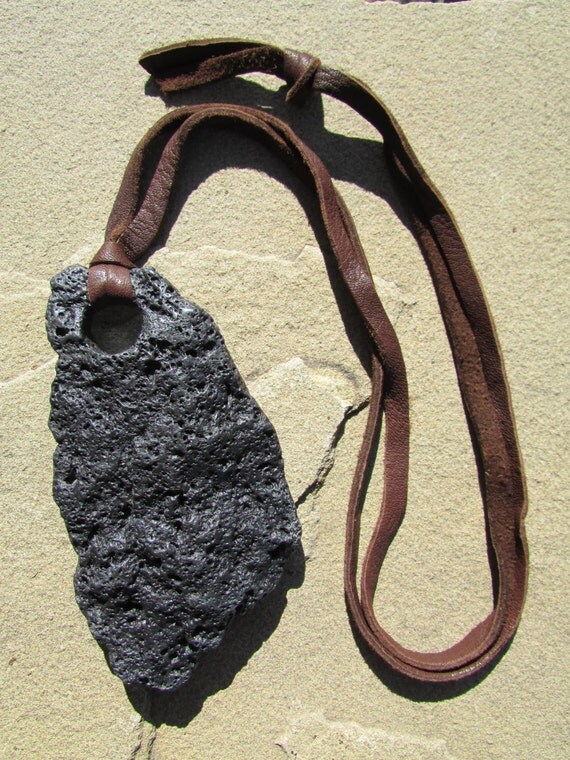
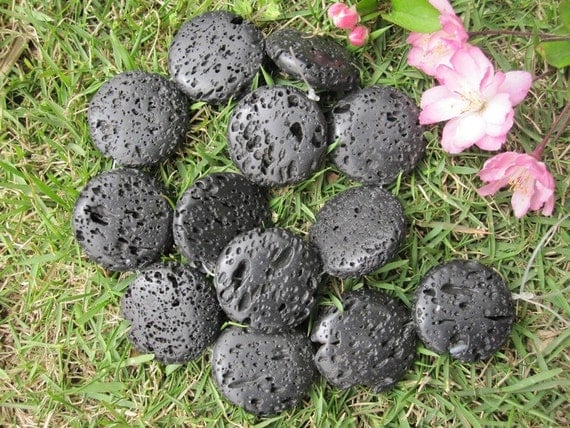
About our institutions, when a couple gets married, they exchange a handmade pendant that is worn for life; it is a symbol of their marriage. For rules/laws and other kinds of decisions for our community, the person who has the final say in discussions, or in important decisions has been awarded a key. He or she must wear it when s/he talks to us about government matters, or else we do not acknowledge what is being said. Our legal tender is made with lava, and the value of it is based on the size and uniformity of it. With it we can buy art, decorations, and other 'non-essential for survival' items. And finally, once you have finished your studies, you are awarded a yellow bracelet that signifies you are an adult and not immature anymore, and that you are contributing to our society.
For class distinctions, the only difference between us is between the people who are leaders--whether they are religious, political, or educational ones--and all others. Those who are leaders are the higher class and are extremely respected and appreciated. As for how we look, there are some differences in our skin color, some of us are reddish gray, and others are darker red-black.
Our life stages are not based on 'ages.' Everybody goes through them in their own pace. They would include, as mentioned, birth--when family and friends are involved. The next stage is when education starts, kids spend a lot more time with teachers and peers than with their own families for the first time and it can be hard, but there is no alternative. Once you finish that education, then you are given your bracelet, and are an active member of society. You start providing your abilities to whatever it has been considered best; it can be recollecting fruits, vegetables, or insects; constructing buildings and houses; taking care of the sick; being a leader's assistant; preparing ceremonies; etc. Then once you are unable to keep working, you are considered old and your family and those who were appointed to take care of others take care of you. And once death seems close, similar to birth, your family stops working to stay with you at all times, and extended family and friends make sure to pick up the work and bring food. This is to make sure this stage is as comfortable as possible, and to give back what elders did for you when you were born.
Some rituals include life stages ceremonies. Funerals are grand events when the deceased goes back to where he or she came from; the volcano takes you back so you can start a new life cycle. Weddings are a two day event, which include the exchange of the pendants in front of everyone, and a lot of singing.
Another ritual would be the several times a year we give thanks to the volcano and show how grateful we are in a festival; we sing and dance. In the mornings shortly after waking up we give our thanks looking at the volcano, and at night just before going to sleep, we do the same.
For food, some of us hunt; but that is very difficult for us since we are slower than the animals; we are not very rapid. And some of us gather fruits, vegetables, and insects.
D.AREAS OF CULTURAL INTEREST
About our institutions, when a couple gets married, they exchange a handmade pendant that is worn for life; it is a symbol of their marriage. For rules/laws and other kinds of decisions for our community, the person who has the final say in discussions, or in important decisions has been awarded a key. He or she must wear it when s/he talks to us about government matters, or else we do not acknowledge what is being said. Our legal tender is made with lava, and the value of it is based on the size and uniformity of it. With it we can buy art, decorations, and other 'non-essential for survival' items. And finally, once you have finished your studies, you are awarded a yellow bracelet that signifies you are an adult and not immature anymore, and that you are contributing to our society.
For class distinctions, the only difference between us is between the people who are leaders--whether they are religious, political, or educational ones--and all others. Those who are leaders are the higher class and are extremely respected and appreciated. As for how we look, there are some differences in our skin color, some of us are reddish gray, and others are darker red-black.
Our life stages are not based on 'ages.' Everybody goes through them in their own pace. They would include, as mentioned, birth--when family and friends are involved. The next stage is when education starts, kids spend a lot more time with teachers and peers than with their own families for the first time and it can be hard, but there is no alternative. Once you finish that education, then you are given your bracelet, and are an active member of society. You start providing your abilities to whatever it has been considered best; it can be recollecting fruits, vegetables, or insects; constructing buildings and houses; taking care of the sick; being a leader's assistant; preparing ceremonies; etc. Then once you are unable to keep working, you are considered old and your family and those who were appointed to take care of others take care of you. And once death seems close, similar to birth, your family stops working to stay with you at all times, and extended family and friends make sure to pick up the work and bring food. This is to make sure this stage is as comfortable as possible, and to give back what elders did for you when you were born.
Some rituals include life stages ceremonies. Funerals are grand events when the deceased goes back to where he or she came from; the volcano takes you back so you can start a new life cycle. Weddings are a two day event, which include the exchange of the pendants in front of everyone, and a lot of singing.
Another ritual would be the several times a year we give thanks to the volcano and show how grateful we are in a festival; we sing and dance. In the mornings shortly after waking up we give our thanks looking at the volcano, and at night just before going to sleep, we do the same.
For food, some of us hunt; but that is very difficult for us since we are slower than the animals; we are not very rapid. And some of us gather fruits, vegetables, and insects.
D.AREAS OF CULTURAL INTEREST
There are a few things that define who we are, and how we interact with each other and with the land. The most important thing for us Ignis, is the volcano. It made us who we are. It is our point for reference. We make sure we can see from our houses. It is such a crucial part for our lives, that for heat, lava, and fire and their respective color, shape, and feel, there are very specific terms. We also use the volcano for directions.
Our companions, the birds, are significant to us. Even those in the wild are important; we try to take care of them too, if they allow it. The periods when they court and produce offspring are times of celebration. We have different ways to refer to them according to size/color/breed/age/and behavior.
Here in =åµå, it tends to be cloudy most of the time. It is also somewhat windy. Cloud shapes and wind directions are essential for us to know at all times, if possible. The clouds help us know the weather for the day, and the wind helps us know if we can hunt/gather and play with our birds.
For those who hunt, since they spend a lot of time at it, there are peculiar ways of naming certain animals, how fast they run, and what they look like.
As for those who gather food and insects, they also have their own words that those who do not perform those activities understand/use; they have particular ways of naming certain colors, and smells.
Plus, we appreciate and respect our elders, so we always address them in a specific and reverent way. There are certain terms for family members, for leaders, and for those who are neither but are in old age.
Our companions, the birds, are significant to us. Even those in the wild are important; we try to take care of them too, if they allow it. The periods when they court and produce offspring are times of celebration. We have different ways to refer to them according to size/color/breed/age/and behavior.
Here in =åµå, it tends to be cloudy most of the time. It is also somewhat windy. Cloud shapes and wind directions are essential for us to know at all times, if possible. The clouds help us know the weather for the day, and the wind helps us know if we can hunt/gather and play with our birds.
For those who hunt, since they spend a lot of time at it, there are peculiar ways of naming certain animals, how fast they run, and what they look like.
As for those who gather food and insects, they also have their own words that those who do not perform those activities understand/use; they have particular ways of naming certain colors, and smells.
Plus, we appreciate and respect our elders, so we always address them in a specific and reverent way. There are certain terms for family members, for leaders, and for those who are neither but are in old age.
